

Privilege or priviledge: which one should you type? The correct spelling is privilege. Priviledge is only a common misspelling, and it will be flagged by every spell checker.
This guide explains what privilege means, why the wrong version looks so tempting, and how to spell it right every time. You will also find examples, synonyms, grammar rules, and a quick FAQ.
Privilege or Priviledge: Comparison Overview
Here is the short answer before we go deeper.
- Privilege is the correct spelling. It is a real English word.
- Priviledge is incorrect. It is not listed in any standard dictionary.
- The mistake happens because many English words end in -ledge, such as knowledge and pledge.
- The right spelling ends in -ilege, with no d.
| Spelling | Correct? | Verdict |
| Privilege | Yes | Use this one |
| Priviledge | No | Spelling error |
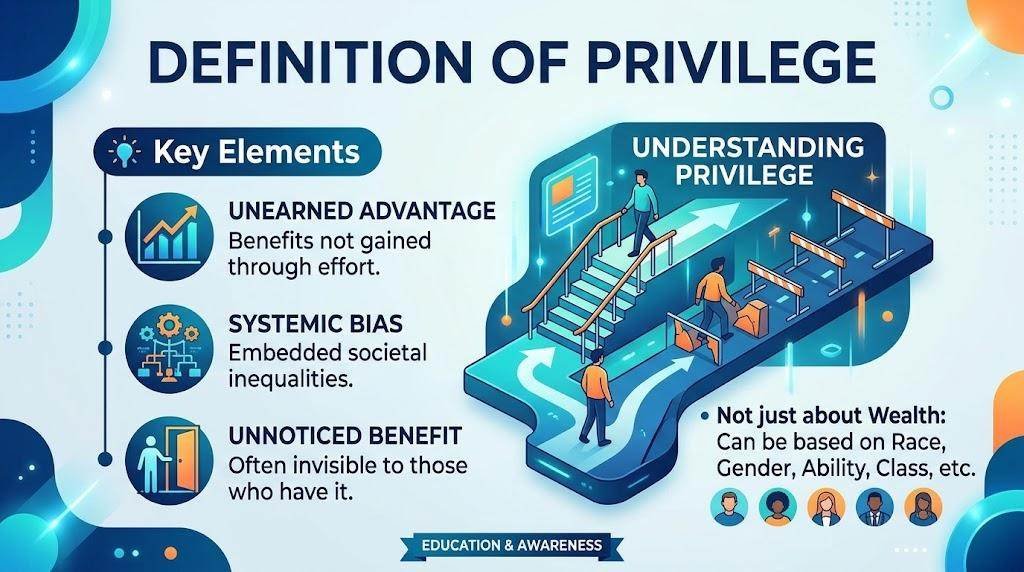
What Does Privilege Mean?
A privilege is a special right, advantage, or benefit that belongs to one person or group. Not everyone has it. It is often tied to status, position, or circumstances.
The word comes from the Latin privilegium, which joins privus (private or individual) and lex (law). So it originally described a law that applied to one person.
Today, the word has a few related senses:
- A special advantage or permission
- An honor or a chance to do something rewarding
- A legal right or protection, such as attorney-client privilege
- An unearned benefit that some groups have, which is common in social discussions
Examples of Privilege in Everyday Life
- Having a quiet place to study is a privilege many students do not get.
- Drivers hold a license as a privilege, and it can be taken away.
- Senior members of a club may receive parking privileges.
- Clean running water at home is a privilege in many parts of the world.
- She considered it a privilege to meet her favorite author.
Is Privilege a Noun or a Verb?
Privilege is mainly a noun. It can also work as a verb, though this is less common. Its adjective form is privileged.
| Form | Word | Example |
| Noun | privilege | Voting is a right and a privilege. |
| Verb | privilege | Some systems privilege speed over safety. |
| Adjective | privileged | He had a privileged upbringing. |
Is Priviledge a Word?
No. Priviledge is not a word in standard English. You will not find it in major dictionaries like Merriam-Webster, Oxford, or Cambridge.
Why Is Priviledge Incorrect?
There are three simple reasons.
- The root has no d. The Latin source, privilegium, does not support one.
- English spelling follows the dictionary. Only privilege is accepted in print.
- Spell checkers reject it. You will see a red underline immediately.
The extra d probably sneaks in because the ending sounds like -ledge when you say it fast. But the sound is /-lidzh/, and the letters are -lege.
Common Examples of the Misspelling Priviledge
Each pair below shows the mistake and the fix.
| Incorrect | Correct |
| It is a priviledge to be here. | It is a privilege to be here. |
| Education should not be a priviledge. | Education should not be a privilege. |
| He lost his priviledges at work. | He lost his privileges at work. |
| She comes from a priviledged family. | She comes from a privileged family. |
| Access is a priviledge, not a right. | Access is a privilege, not a right. |
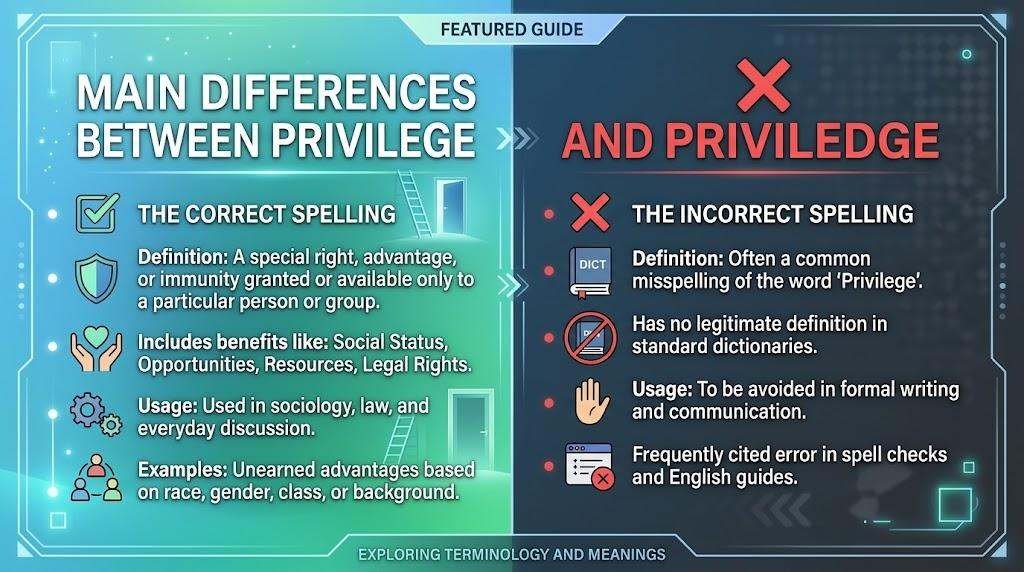
Correct vs. Incorrect Spelling
The only real difference is one extra letter. Privilege has the letters p-r-i-v-i-l-e-g-e. Priviledge adds a d after the l and drops the clean -lege ending.
Key Differences Explained
- Dictionary status: Privilege is listed. Priviledge is not.
- Usage: Privilege is accepted in school, work, law, and media. Priviledge is a typo.
- Etymology: Privilege traces to Latin. Priviledge has no history behind it.
- Professional impact: A misspelling in an email, résumé, or essay can hurt credibility.
Why Do People Misspell Privilege?
Common Spelling Mistakes
Besides priviledge, writers often type other versions. Here are the usual suspects:
- Priviledge: adds an extra d
- Privelege: swaps the second i for e
- Privilige: swaps the final e for i
- Priveledge: mixes both errors
- Privlege: drops a vowel in the middle
The word is also tricky because it has three syllables when written but is often spoken as two (PRIV-lij). When we say it quickly, the middle vowel nearly disappears, so it is hard to know what to write.
Easy Memory Trick to Spell Privilege Correctly
Try one of these quick tricks:
- Split it up: PRIV + I + LEGE. Say it slowly: priv-i-lege.
- The leg trick: When you have a leg up on others, you have a privILEGe. The word contains leg, not ledge.
- Vowel pattern: The vowels go i, i, e, e. Think i-i-e-e.
- Link to private: Privilege and private both start with priv. Both come from the idea of something belonging to one person.
Privilege or Priviledge: Comparison Table
| Feature | Privilege | Priviledge |
| Correct spelling | Yes | No |
| Found in dictionaries | Yes | No |
| Part of speech | Noun, verb | None |
| Origin | Latin privilegium | None |
| Plural | Privileges | Not valid |
| Adjective form | Privileged | Not valid |
| Acceptable in formal writing | Yes | No |
Is Privilege Spelled Differently in British and American English?
No. Unlike words such as colour and color, privilege has one spelling worldwide. There is no regional variant.
Privilege in British English (UK)
British English uses privilege. The only differences are in pronunciation, which can vary slightly by accent. Terms like parliamentary privilege are common in UK news and politics.
Privilege in American English (US)
American English also uses privilege. Common US phrases include attorney-client privilege, executive privilege, and white privilege in social commentary. The spelling stays the same in each case.
Synonyms of Privilege
Common Synonyms of Privilege
The best synonym depends on the meaning you want.
| Meaning | Synonyms |
| Special right | prerogative, entitlement, right, license |
| Advantage | benefit, perk, edge, leg up |
| Honor | honor, distinction, favor, courtesy |
| Legal protection | immunity, exemption, liberty, franchise |
Use perk in casual writing. Use prerogative or entitlement in formal writing.
Grammar Guide: How to Use Privilege Correctly
How to Use Privilege in a Sentence
Place privilege where you would use any noun. It usually follows an article (a, the) or a possessive word.
- It is a privilege to speak with you today.
- Use of the gym is a privilege for members only.
- They enjoy the privilege of early access.
What Is the Plural of Privilege?
The plural is privileges. Simply add s.
- Employees receive extra privileges after one year.
- The court limited his visiting privileges.
How to Pronounce Privilege
Privilege is pronounced PRIV-uh-lij or PRIV-lij.
- IPA: /priv-uhl-ij/ or /priv-lij/
- The stress falls on the first syllable.
- The last sound is a soft j, as in bridge.
Can Privilege Be Used as a Verb?
Yes. As a verb, it means to give someone a special right or advantage, or to treat one thing as more important than another.
- The policy privileges large companies over small ones.
- Tradition privileged older children in the family.
The forms are privilege, privileges, privileged, and privileging. You will see this use more in academic and formal writing.
Simple Rules to Remember the Correct Spelling
- Never put a d in the word.
- End it with -lege.
- Keep the vowel pattern i-i-e-e.
- Add d only for the adjective: privileged.
- Add s for the plural: privileges.
When to Use Privilege
Using Privilege as a Noun
Use the noun when you talk about a right, benefit, or honor.
- Being able to vote is a privilege that people fought for.
- Members enjoy library privileges all year.
Using Privilege as a Verb
Use the verb when something is given priority or special treatment.
- Some teachers privilege exam results over class participation.
- The old law privileged landowners.
Examples of Privilege in Real-Life Sentences
Privilege in Everyday Conversations
- It is a privilege to cook for all of you tonight.
- My brother lost his phone privileges for a week.
- Having a home library was a privilege I took for granted.
- Do not treat your free time like a privilege that never ends.
- I got the privilege of sitting in the front row.
Privilege in Formal and Professional Writing
- The documents are protected by attorney-client privilege.
- Employees must not abuse their access privileges.
- The senator invoked parliamentary privilege during the debate.
- It was our privilege to host the delegation.
- The study examines how economic privilege shapes educational outcomes.
Frequently Asked Questions
Is it spelled privilege or priviledge?
It is spelled privilege. “Priviledge” is a common misspelling and is not a real word.
What is the difference between privilege and priviledge?
Privilege is the correct word for a special right or advantage. Priviledge has an extra “d” and is simply a spelling error.
Why is priviledge incorrect, and how do you spell privilege correctly?
The word comes from Latin and has no “d” in it. Spell it p-r-i-v-i-l-e-g-e, ending in “-lege.”
What does privilege mean in English, and how is it used in a sentence?
It means a special right, advantage, or honor. Example: “It is a privilege to learn from her.”
How do you remember the correct spelling of privilege?
Remember that you have a leg up with a privilege. The word has “leg,” not “ledge.”
Is privilege a noun or an adjective, and what is its plural form?
Privilege is a noun (and sometimes a verb). The adjective is privileged, and the plural is privileges.
Final Thoughts
The answer is clear: privilege is correct, and “priviledge” is a misspelling. The extra “d” slips in because of familiar words like knowledge and pledge, but it has no place here.
Keep the “leg” trick and the i-i-e-e pattern in mind, and you will get it right every time. Whether you are writing an email, an essay, or a report, the correct spelling shows care and builds trust with your reader. If pairs like this trip you up, see how we settle storys vs stories and the difference between of course or ofcourse.