

Requester or requestor: which one should you write? Both spellings are accepted, but requester is the safer and more common choice in general writing.
The difference is mostly about style and context. This guide explains what each word means, where each one fits best, and how to choose for your emails, forms, and documents.
Requester or Requestor: Quick Answer
Here is the fast version.
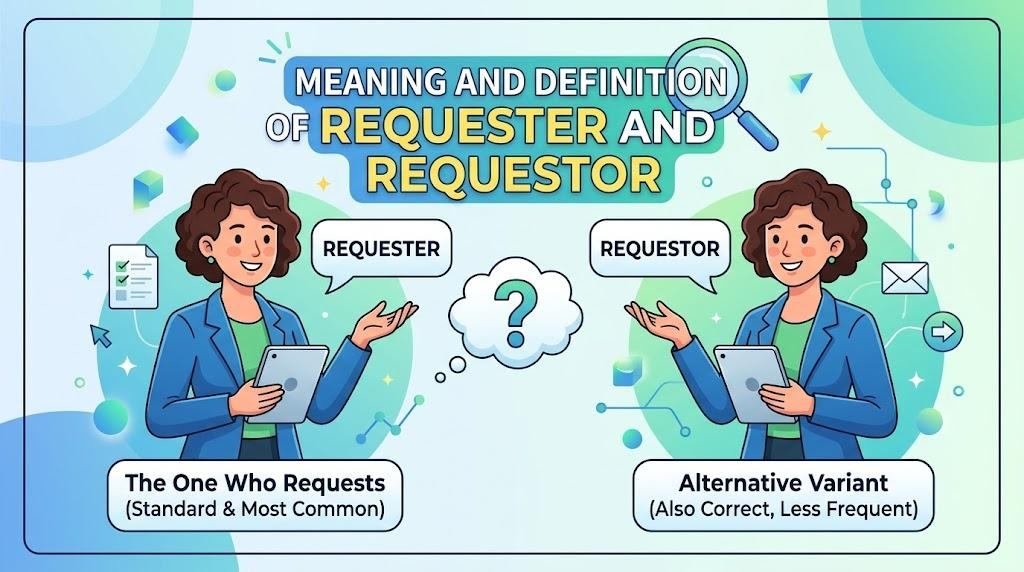
- Requester is the standard spelling. Use it in everyday and professional writing.
- Requestor is an accepted variant. It shows up often in legal forms, government paperwork, and IT systems.
- Both words mean the same thing: a person who makes a request.
- Pick one spelling and keep it the same across your whole document.
| Question | Answer |
| Which is more common? | Requester |
| Is the requestor wrong? | No, it is a variant |
| Do they mean the same? | Yes |
| Does pronunciation change? | No |
What Does Requester Mean?
A requester is a person (or sometimes a system) that asks for something. The thing requested could be information, a service, a document, or permission.
The word is built from the verb request plus the common ending -er, which turns an action into a “doer,” just like teacher or reader.
- The requester asked for a copy of the invoice.
- Each requester must sign the form.
What Does Requestor Mean?
Requestor has the same meaning. It uses the -or ending, which comes from Latin and appears in words like creator, investor, and editor.
You will most often see requestor on official forms, in records requests, and in software documentation.
- Enter the requestor’s name in Section 1.
- The requestor must approve the change before it goes live.
Do Requester and Requestor Have the Same Meaning?
Yes. Dictionaries treat them as the same word with two spellings. Some writers like to reserve requestor for formal or technical roles, but that is a habit, not a rule.
Requester vs. Requestor: Main Differences
Spelling and Usage Differences
The only change is two letters at the end: -er versus -or. The meaning and the pronunciation (ri-KWES-ter) stay the same.
What changes is where you tend to see each one:
- Requester: emails, articles, customer service, general business writing
- Requestor: legal forms, government and records-request forms, ticketing and workflow tools, technical specs
Which Spelling Is More Common?
Requester is used more often overall, especially when the word refers to a person in normal writing. Requestor appears less often, but it is still frequent in forms and technical documents. Corpus searches and general web usage point in the same direction.
Requester vs. Requestor Comparison Table
| Feature | Requester | Requestor |
| Ending | -er | -or |
| Meaning | Person who makes a request | Person who makes a request |
| Frequency | More common | Less common |
| Typical setting | General and business writing | Legal, government, technical |
| Pronunciation | ri-KWES-ter | ri-KWES-ter |
| Acceptable? | Yes | Yes (variant) |
| Safest choice | Yes | Only if your field uses it |
Which Spelling Is Preferred in the United States?
Requester is the preferred form in most American style guidance and everyday writing. Major dictionaries list it first and give requestor as a variant.
That said, American agencies, hospitals, and tech companies often print “Requestor” on their own forms. If you are filling one out, match the form.
Examples in American English
- The requester submitted the records request on Monday.
- Please email the requester with an update.
- The requestor must show a valid photo ID. (common on official forms)
- Our help desk replies to every requester within one business day.
Requester or Requestor in British English
Which Spelling Is Preferred in the UK?
British writers also lean toward requester in normal prose. There is no strong British rule that favors requestor, so the choice looks much like it does in the US.
Is Requestor Acceptable in British English?
Yes. Some dictionaries list requestor as an alternative spelling, and you may see it in British business and public-sector forms. It is not an error. It is simply less usual in plain writing.
Requester vs. Requestor vs. Requestee
What Does Requestee Mean?
A requestee is the person who receives a request and is asked to act on it. It is a less common word, but it is useful in legal, HR, and workflow writing where you need to name both sides.
Difference Between a Requester and a Requestee
| Role | What they do | Example |
| Requester / Requestor | Makes the request | The employee asking for leave |
| Requestee | Receives the request | The manager who approves the leave |
Examples of Requester, Requestor, and Requestee
- The requester filled out the time-off form.
- The requestor attached two supporting documents.
- The requestee has five days to respond.
- If the requestee declines, the requester can appeal.
Synonyms and Related Words for Requester
Common Synonyms of Requester
The best synonym depends on the setting.
| Setting | Synonyms |
| General | asker, inquirer, seeker |
| Formal | applicant, petitioner, solicitor |
| Workplace | submitter, originator, ticket owner |
| Customer-facing | client, customer, user |
What Is the Opposite of Requester?
There is no perfect opposite, but these words come close:
- Requestee: the person who receives the request
- Respondent: the person who answers
- Provider: the one who supplies what was asked for
- Grantor: the one who approves the request
Grammar Guide: How to Use Requester and Requestor
How to Use Requester in a Sentence
Treat it like any noun. It can be the subject, the object, or part of a possessive phrase.
- The requester sent three follow-up messages.
- We contacted the requester for more details.
- The requester’s address is on file.
How to Use Requestor in a Sentence
Use it the same way.
- The requestor must sign and date the form.
- Our system notifies the requestor once the file is ready.
- The requestor’s manager gives final approval.
What Are the Plural Forms of Requester and Requestor?
Just add “s.”
- Requesters: The requesters were sorted by priority.
- Requestors: All requestors must register first.
For the possessive, use an apostrophe: requester’s (one person) or requesters’ (many people).
Common Grammar and Spelling Mistakes
- Mixing both spellings in one document. Choose one and stick with it.
- Writing “requestor” in casual emails when your company style uses “requester.”
- Typing “requestee” when you mean the person asking. The requestee is the one being asked.
- Misplacing the apostrophe. Write “the requester’s request,” not “the requesters request.”
- Using “requester” as a verb. It is a noun. The verb is request.
When to Use Requester or Requestor
When to Use Requester in Everyday and Professional Writing
Choose requester when you write:
- Emails and chat messages
- Blog posts, reports, and articles
- Customer support replies
- General business documents
It is the default, and readers will not stop to question it.
When to Use Requestor in Legal and Technical Writing
Choose requestor when:
- A government or legal form already uses it
- Your company’s software labels the field “Requestor”
- A contract or policy defines the term that way
- Your style guide says so
In these cases, matching the existing label keeps everything consistent and searchable.
How to Choose the Right Spelling for Your Document
Follow this simple order:
- Check the style guide for your company or publication.
- Match the form or system you are working with.
- Look at earlier documents in the same project.
- If nothing applies, use a requester.
Then keep it the same from start to finish.
Requester or Requestor: Real-World Examples
Examples in Emails and Everyday Conversations
- “Thanks for reaching out. As the requester, you will get an update by Friday.”
- “Could you confirm who the requester is for this order?”
- “I’m the requester on this ticket, and I haven’t heard back yet.”
- “Please CC the original requester on your reply.”
Examples in Business and Workplace Documents
- The requester must get manager approval before ordering equipment.
- Each purchase request lists the requester, the budget code, and the due date.
- The finance team contacts the requester if the invoice is unclear.
- Requesters should attach a quote to every submission.
Examples in Legal and Administrative Documents
- The requestor must state the records being sought as clearly as possible.
- The agency will notify the requestor in writing of its decision.
- The requestor may appeal within 30 days. (sample wording only)
- A fee may be charged to the requestor for copies.
Examples in Software and IT Documentation
- The requestor service sends a call to the API.
- The system assigns each ticket to a requestor ID.
- If the request fails, an error message is returned to the requester.
- The workflow tool emails the requestor when the status changes.
Frequently Asked Questions
Is it spelled requester or requestor, and which spelling is correct?
Both are correct. Requester is the more common and safer spelling, while requestor is an accepted variant.
What is the difference between requester and requestor?
There is no difference in meaning. Requester is the usual choice, and requestor appears more in legal and technical forms.
Is requester or requestor more commonly used in American English?
Requester is more common in American English. Requestor still shows up often on official forms and in IT systems.
Is requester or requestor correct in British English?
Both are acceptable. Requester is typical in everyday British writing, and requestor is a recognized variant.
What does requester mean, and how is it used in a sentence?
A requester is a person who asks for something. Example: “The requester asked for a copy of the report.”
What is the plural of requester or requestor?
Add “s” to either word: requesters or requestors.
Final Thoughts
Requester and requestor are two spellings of the same word. If you are unsure, go with requester for general writing, and switch to requestor only when a form, system, or style guide uses it.
The real goal is consistency. Choose one spelling, match your audience, and your writing will look clear and professional. For more spelling pairs, compare analyze or analyse and the difference between mold vs mould.


2 thoughts on “Requester or Requestor: Which Is Correct? Meaning, Differences & Examples (2026)”