

“Happy Holidays” is the standard greeting. It wishes someone well across the whole festive season, from Thanksgiving to New Year’s. “Happy Holiday” is also correct, but only in narrower situations.
Many people pause before typing a card or email. This guide explains the grammar, shows when each phrase fits, and gives examples you can copy and adapt.
Happy Holiday or Happy Holidays: Which Is Correct?
Both are grammatically correct, but they do different jobs. “Happy Holidays” is the seasonal greeting. “Happy Holiday” refers to one specific day or one trip.
Quick Answer: When to Use Each Phrase
| Phrase | Use it when | Example |
| Happy Holidays | You mean the whole festive season or several celebrations | Happy Holidays, everyone! |
| Happy Holiday | You mean one holiday or one vacation | Happy Holiday! Enjoy your long weekend. |
If you are unsure, choose Happy Holidays. It works in cards, emails, and social posts.
Is “Happy Holiday” Grammatically Correct?
Yes. “Holiday” is a singular noun, so the phrase is grammatically sound. It simply sounds less common as a greeting.
You will hear it when someone refers to a single day off, a bank holiday, or a vacation. In British English, “holiday” often means a trip away, so “Have a happy holiday” feels natural before someone travels.
Is “Happy Holidays” the Most Common Greeting?
In the United States, yes. The plural form is the default seasonal greeting in stores, offices, and holiday cards.
It is popular because the season packs in many occasions, such as Christmas, Hanukkah, Kwanzaa, Diwali (in some years), and New Year’s Eve. One short phrase covers all of them.
What Does “Happy Holidays” Mean?
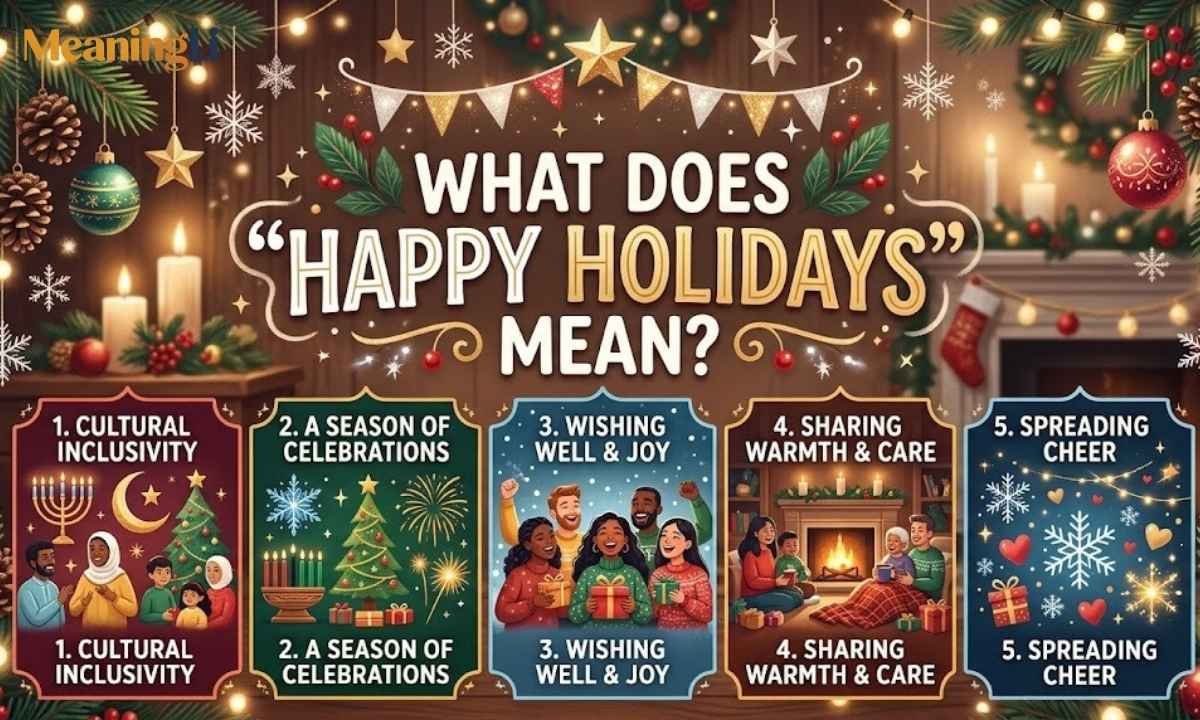
“Happy Holidays” is a general seasonal wish. It means “I hope your festive season is joyful.” The word “holidays” is plural because it stands for several special days.
When to Use “Happy Holidays”
Use it when:
- You don’t know which holidays the person celebrates
- You are writing to a mixed group, like a team or customer list
- You want to cover multiple celebrations at once
- You are sending a message late in the year and want a warm, neutral tone
Examples of “Happy Holidays” Used Correctly
- Happy Holidays from all of us at the clinic.
- We wish you and your family happy holidays and a peaceful new year.
- Happy Holidays, neighbors! The lights on your street look great.
- Thank you for a wonderful year. Happy Holidays!
What Does “Happy Holiday” Mean?
“Happy Holiday” is a wish tied to one occasion. It can refer to a specific festival, a day off, or a vacation.
When to Use “Happy Holiday”
Use the singular when:
- You are greeting someone on a single named holiday
- You are wishing someone a good time on a trip or break
- You are talking about one day of rest, such as a public holiday
Examples of “Happy Holiday” Used Correctly
- Happy Holiday! Enjoy the long weekend with your family.
- Have a happy holiday in Spain, and send photos.
- Today is a bank holiday, so happy holiday to everyone off work.
- Wishing you a happy holiday at the lake this week.
Happy Holiday in American and British English
The word “holiday” itself changes slightly across regions.
| American English | British English | |
| Common meaning of “holiday” | A festive day or season | A vacation or time away |
| Typical vacation phrase | Have a great vacation | Have a lovely holiday |
| Seasonal greeting | Happy Holidays | Happy Christmas or Merry Christmas |
In the UK, “Happy Holidays” can sound slightly American. Britons often prefer “Happy Christmas” or “Merry Christmas” in December.
Happy Holiday or Happy Holidays: Key Differences
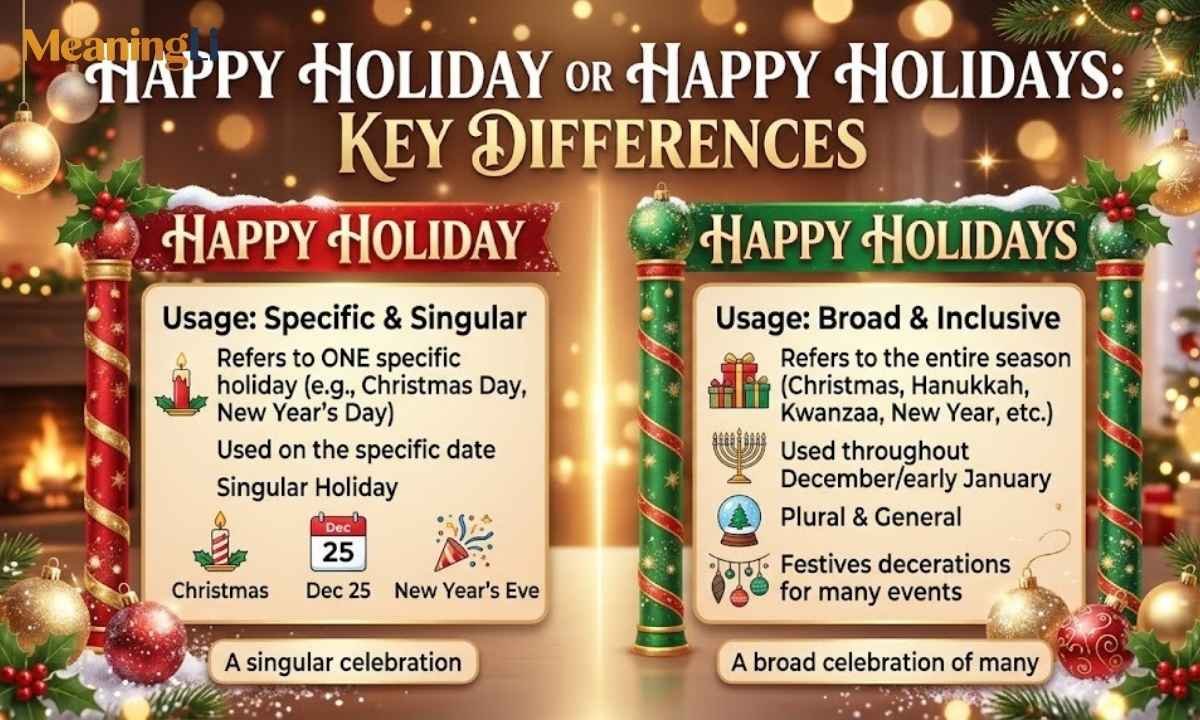
The main difference is how many celebrations or days you are referring to.
Singular vs. Plural: Which Form Should You Use?
Use the plural for a general seasonal greeting. Use the singular for one event or one trip.
- Plural (holidays): several days or the full season
- Singular (holiday): one day, one break, or one vacation
Holiday or Holidays: Which Is Correct?
Neither is wrong. They are simply different forms for different meanings.
A simple test works well. If you could replace the phrase with “happy Christmas, Hanukkah, and New Year,” use holidays. If you mean one occasion, use holiday.
Happy Holiday vs. Happy Holidays Examples
| Situation | Better choice | Sample sentence |
| Season-wide card | Happy Holidays | Happy Holidays and best wishes for the new year. |
| Friend leaving on a trip | Happy Holiday | Happy holiday! Have fun on the coast. |
| Group email in December | Happy Holidays | Happy Holidays to our whole team. |
| One public holiday | Happy Holiday | Happy holiday, everyone, see you Tuesday. |
When to Use “Happy Holidays” in Different Situations
The plural greeting suits most seasonal messages. Your tone changes with the audience.
Professional Emails and Business Communication
In a work setting, “Happy Holidays” is safe and respectful. It includes colleagues from different backgrounds.
- Happy Holidays from our team to yours. Our office will be closed from December 24 to January 2.
- Thank you for your support this year. Wishing you happy holidays.
Greeting Cards and Social Media Posts
Cards and posts can be warmer and more personal.
- Happy Holidays from our family to yours. May your home be full of laughter.
- Hot cocoa, cozy lights, and good company. Happy Holidays, friends!
Greeting Friends, Strangers, and Acquaintances
Spoken greetings are short.
- Happy Holidays! (to a cashier)
- Happy Holidays! Do you have big plans? (to an acquaintance)
- Happy Holidays, Maria. See you in January. (to a coworker)
Happy Holidays Wishes and Greeting Examples
Here are short wishes you can adapt:
- Wishing you a season filled with warmth and rest. Happy Holidays!
- May your holidays be bright, calm, and full of good food.
- Happy Holidays to a wonderful friend. Let’s catch up soon.
- Sending you peace, joy, and plenty of cookies this holiday season.
When to Use “Happy Holiday” in Different Situations
The singular form shines when you mean one event or a stretch of time off.
Referring to One Holiday or Holiday Break
If everyone is celebrating the same single day, the singular fits.
- Happy holiday! The shops reopen tomorrow.
- It’s a holiday today, so enjoy the quiet.
Wishing Someone a Pleasant Vacation
British and Commonwealth speakers use “holiday” for a trip.
- Have a happy holiday, and don’t check your emails!
- We hope you have a happy holiday in Italy.
Have a Happy Holiday or Have Happy Holidays?
Both are fine, but they mean slightly different things.
| Phrase | Best for |
| Have a happy holiday | One trip, one day off, or one occasion |
| Have happy holidays | The whole festive season |
Here, “have a happy holiday season” also works well and sounds natural.
Happy Holidays or Merry Christmas: Which Should You Say?
Both are good wishes. Your choice depends on who you are speaking to.
A Pew Research Center survey from 2013 found that 42% of Americans preferred “Merry Christmas” from stores, 12% preferred “Happy Holidays,” and 46% said it did not matter. Most people care more about the kindness behind the words than the exact phrase.
When to Say “Merry Christmas”
Say it when you know the person celebrates Christmas. It feels warm and personal in that case.
- Merry Christmas, Grandma!
- Merry Christmas to you and your family.
When to Say “Happy Holidays”
Say it when you don’t know what the person celebrates, or when speaking to a group. It includes Christmas as one of the celebrations, rather than leaving other occasions out.
- Happy Holidays to our customers around the world.
- Happy Holidays, class. Enjoy the break.
Can You Use Both Greetings?
Yes. Many people mix them depending on the person.
- Merry Christmas and Happy Holidays to all.
- Wishing you a Merry Christmas and a Happy New Year.
Match the greeting to the person. If they greet you with a specific wish, it is polite to return it.
Happy Holiday or Happy Holidays: Examples in Sentences
Examples for Personal Messages
- Happy Holidays, Mum! Thank you for everything this year.
- Have a happy holiday on the island, and rest well.
- Happy Holidays to my favorite cousins.
- Hope your holiday is full of good food and long naps.
Examples for Work Emails and Business Messages
- Happy Holidays from everyone at Brightline Design.
- Our team wishes you happy holidays and a prosperous new year.
- Our offices will close for the holidays on December 23.
- Thank you for your business. Happy Holidays!
Examples for Holiday Cards and Social Media Captions
- Season’s greetings and Happy Holidays from our house to yours.
- Happy Holidays! Here’s to cozy nights and bright lights.
- Taking a happy holiday break. Back on January 3!
- Happy Holidays from the Parker family.
Is it “Happy Holiday’s” or “Happy Holidays”?
The correct greeting is Happy Holidays, without an apostrophe.
Why “Holiday’s” Is Usually Incorrect in a Greeting
The “s” in “holidays” makes the noun plural. Apostrophes show possession or contractions, not plurals.
| Form | Correct? |
| Happy Holidays | ✅ Yes |
| Happy Holiday’s | ❌ No |
When to Use “Holiday’s” and “Holidays'”
Use apostrophes only when showing ownership.
- Holiday’s (singular possessive): The holiday’s origins go back centuries.
- Holidays’ (plural possessive): The holidays’ busiest day is December 24.
Capitalization Rules for Happy Holidays
Capitalize the greeting when it opens a message or stands alone. Lowercase it in the middle of a sentence.
Should You Write “Happy Holidays” or “happy holidays”?
Both can be right, depending on position.
- Capitalized: Happy Holidays! (standalone greeting)
- Lowercase: I wish you happy holidays. (inside a sentence)
Many brands capitalize it in cards and subject lines for style. Choose one approach and stay consistent.
When to Capitalize the Names of Specific Holidays
Always capitalize named holidays.
- Christmas
- Hanukkah
- Kwanzaa
- Diwali
- Thanksgiving
- New Year’s Eve
General words like “holiday season” or “winter break” stay lowercase.
Common Mistakes to Avoid When Using Happy Holiday or Happy Holidays
- Adding an apostrophe. “Happy Holiday’s” is wrong as a greeting.
- Using the singular for the season. “Happy Holiday” can feel odd in a mass December email.
- Capitalizing mid-sentence. Write “I wish you happy holidays,” not “Happy Holidays” inside a sentence.
- Ignoring the audience. A friend who loves Christmas may prefer “Merry Christmas.”
- Mixing regional styles. In British writing, “Happy Christmas” often sounds more natural than “Happy Holidays.”
- Forgetting to capitalize specific holidays. “Christmas” and “Hanukkah” should be capitalized.
Frequently Asked Questions
Should I say happy holiday or happy holidays?
Say “happy holidays” for the festive season and “happy holiday” for one day or one trip.
What is the difference between a happy holiday and happy holidays?
“Happy holiday” refers to one occasion or vacation. “Happy holidays” covers the whole season or multiple celebrations.
Is it grammatically correct to say happy holiday?
Yes. “Holiday” is a singular noun, so the phrase is correct when you mean a single day or break.
Why do people say happy holidays instead of merry Christmas?
“Happy holidays” includes several celebrations in one phrase. People use it when they don’t know which holiday the listener celebrates.
When should you use happy holiday or happy holidays in a greeting?
Use “happy holidays” for a general seasonal greeting. Use “happy holiday” for a single day, trip, or break.
Is happy holidays correct for Christmas and New Year greetings?
Yes. It covers Christmas, New Year’s, and other celebrations in the same period.
Final Thoughts
“Happy Holidays” is the safest and most common seasonal greeting. “Happy Holiday” is perfectly correct too, but it works best for a single day or a trip.
Skip the apostrophe, match the capitalization to your sentence, and choose the wish that suits your reader. A warm tone matters more than a perfect phrase.
Related commonly confused words: Of Course or Ofcourse, Soo vs So, and Storys vs Stories.


1 thought on “Happy Holiday or Happy Holidays: Which Is Correct? Meaning, Usage & Examples (2026)”