

If you’ve ever received a text that just says “hru” and paused to figure out what it means, you’re definitely not the only one. Texting slang moves fast, and short forms like this show up in DMs, group chats, and comments every single day.
This guide breaks down exactly what HRU means, how people use it in real conversations, and how to reply naturally. By the end, you’ll know exactly when to use it and when it’s better to skip it.
What Does HRU Mean in Text?
HRU is short for “How Are You.” It’s a quick, casual way to check in on someone without typing the full question. People use it to start conversations, catch up with friends, or simply show that they’re thinking of someone.
HRU Full Form: How Are You
Breaking down the abbreviation letter by letter makes it easy to remember:
- H = How
- R = Are
- U = You
Each letter replaces a full word, which is a common pattern in texting slang. It saves time while still getting the message across clearly.
What Does HRU Mean in a Conversation?
In everyday texting, HRU works as a casual greeting or check-in question. It’s the digital equivalent of saying “how are you” out loud, just faster to type and read. People often use it to open a chat, respond after a greeting, or ask about someone’s day.
Quick Examples of HRU in Text
- “Hey! hru”
- “long time no talk, hru been”
- “hru doing today”
- “morning! hru feeling”
How Is HRU Used in Text Messages?
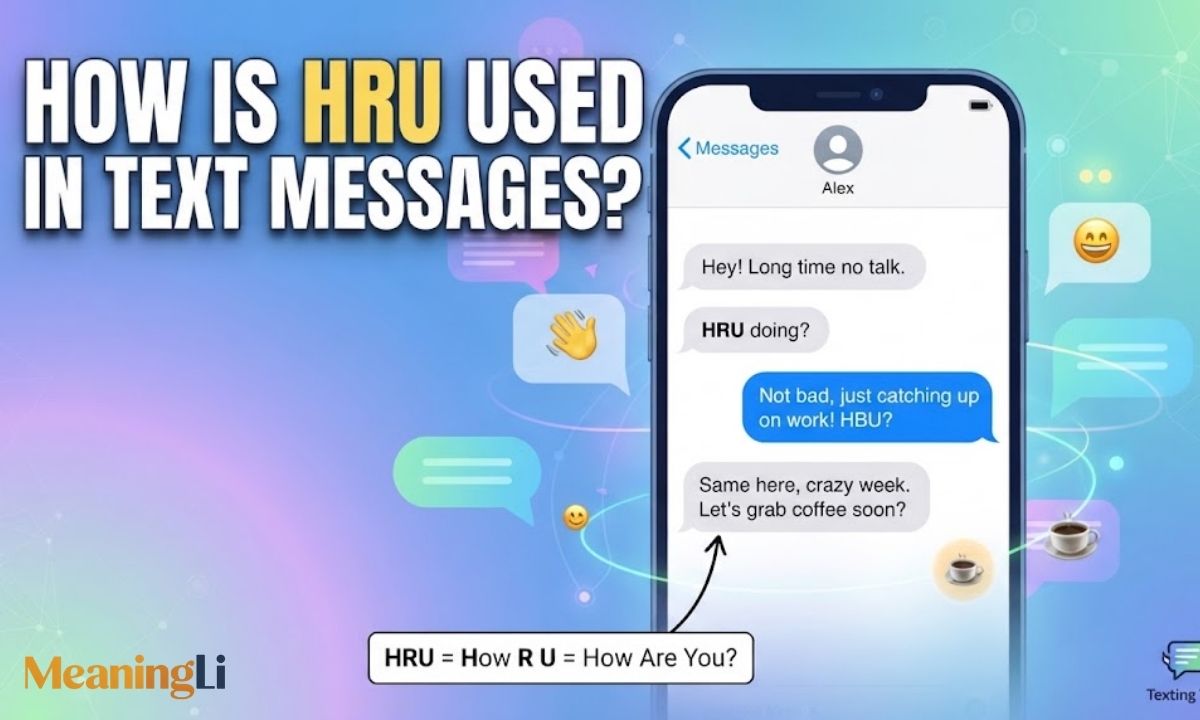
HRU shows up in a few common situations, and understanding these helps you use it naturally instead of forcing it into the wrong context.
Starting a Conversation
HRU is one of the easiest ways to open a chat, especially with someone you haven’t texted in a while.
Checking In With Someone
It’s often used to ask about someone’s wellbeing, especially after a stressful day, an event, or a tough situation.
Keeping a Conversation Going
When a conversation starts to slow down, asking HRU can bring it back to life by shifting focus to the other person.
Reconnecting After Some Time
HRU is a common first message when reaching out to someone after weeks or months of no contact.
What Does HRU Mean on Snapchat, Instagram, TikTok, and WhatsApp?
The meaning of HRU stays the same across every platform, it’s always short for “how are you.” However, the tone can shift slightly depending on where it’s used.
| Platform | Common Usage |
| Snapchat | Quick check-ins after a snap or streak conversation |
| Used in DMs to open a conversation or reply to a story | |
| TikTok | Common in comment replies or DMs after interacting with content |
| Used for personal check-ins, especially with friends and family |
Across all these apps, HRU is meant to feel casual, friendly, and low-pressure.
HRU Texting Examples
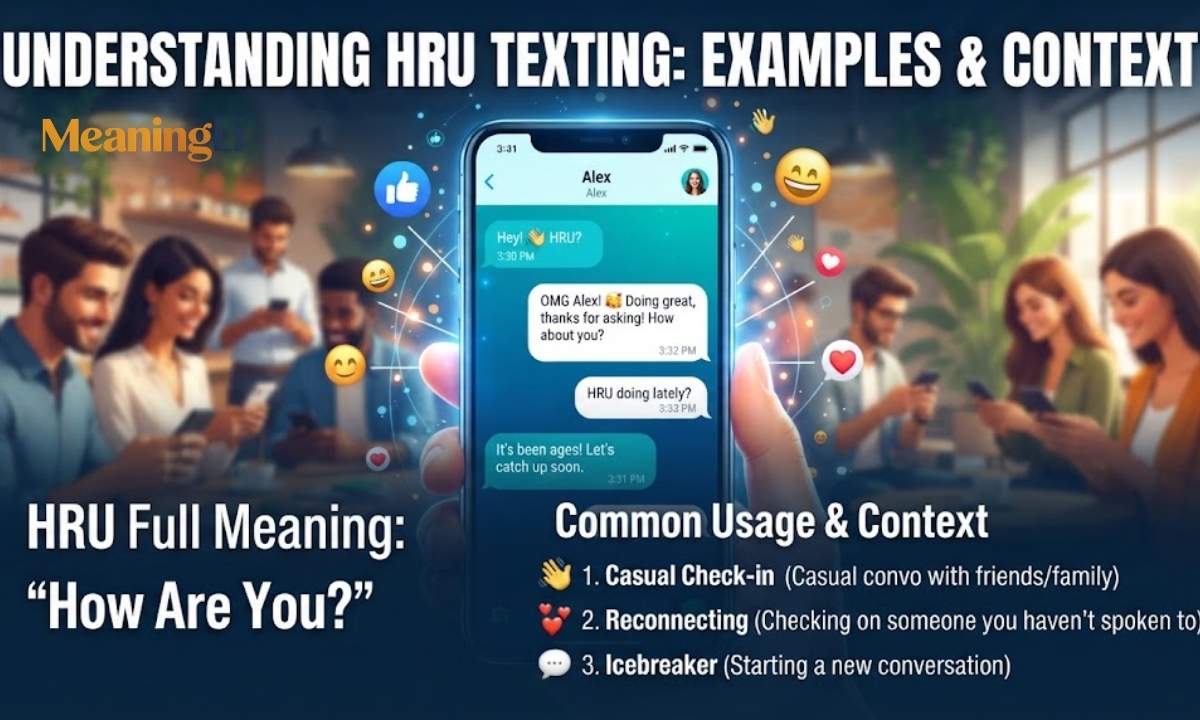
Seeing HRU in real conversations makes it easier to understand the tone behind it. Here are examples across different everyday situations.
Casual Conversation
Person 1: yo hru Person 2: pretty good, just relaxing. hru?
Conversation Between Friends
Friend 1: haven’t talked in forever, hru been Friend 2: honestly been busy with work, but doing okay! hru
Checking In on Someone
Person 1: saw you had a rough exam today, hru feeling Person 2: stressed lol but I think it went okay
Starting a New Conversation
Person 1: Hey, it’s been a while! hru Person 2: good! just got back from vacation, hru
Dating or Flirty Context
Person 1: hey stranger, hru 😊 Person 2: better now that you texted lol, hru
What Does HRU Mean From a Girl or Guy?
The meaning of HRU never changes based on who sends it, but the intent behind it can feel different depending on context.
HRU From a Girl
When a girl sends HRU, it usually means she’s genuinely checking in or trying to start a friendly conversation. In a dating context, it can also be a soft way of showing interest.
HRU From a Guy
When a guy sends HRU, it often works the same way, either as a casual check-in or a low-pressure way to open a conversation with someone he’s interested in.
Does HRU Mean Something Different Based on Who Sends It?
Not really. The core meaning stays the same for everyone. What changes is the emotional undertone, which depends on the relationship, the timing, and the rest of the conversation, not the gender of the sender.
Is HRU Rude, Flirty, or Friendly?
HRU is one of the more neutral texting abbreviations out there, but tone still plays a role in how it’s received.
Is HRU Rude?
No, HRU is not inherently rude. It’s simply a shortened version of a common, polite question. Any rudeness usually comes from the surrounding conversation, not the abbreviation itself.
Can HRU Be Flirty?
Yes, depending on context. When paired with emojis, sent late at night, or used by someone showing romantic interest, HRU can carry a flirty undertone.
Is HRU Usually Friendly?
Yes. In most everyday conversations, HRU is simply a friendly, casual check-in with no deeper meaning attached.
Does HRU Always Mean Someone Genuinely Cares?
Not always. Sometimes it’s just a conversational habit or an easy way to keep a chat going rather than a deep, meaningful check-in. Context and follow-up messages usually reveal the real intent.
How to Respond to HRU?
Replying to HRU is simple, but the tone of your response can shape the rest of the conversation.
Casual Replies
- “good, hbu”
- “same as always lol”
- “not bad, u?”
Friendly Replies
- “doing well! how about you”
- “pretty good, thanks for asking”
- “can’t complain, hru been”
Funny Replies
- “surviving lol”
- “living the dream (barely)”
- “ask me after coffee”
Honest Replies
- “kind of stressed today, tbh”
- “not my best day, but I’ll manage”
- “tired but okay overall”
How to Keep the Conversation Going?
After answering, add a follow-up question or detail to avoid a dead-end reply. For example: “good! just got out of class, what about you, how’s your day been?”
HRU in Different Contexts
The way HRU feels can shift depending on who you’re talking to.
With Friends
Among friends, HRU is casual and often used without much thought, it’s just part of natural conversation flow.
With Someone You Just Met
When texting someone new, HRU can feel like a safe, low-pressure way to keep the conversation going.
Dating or Romantic Conversations
In dating contexts, HRU often works as a soft check-in that can open the door to deeper conversation.
School or Classmates
Students often use HRU casually in group chats or one-on-one messages about assignments, exams, or daily life.
Professional Communication
HRU is rarely appropriate here. Professional messages typically call for the full phrase “How are you?” instead.
When Should You Use HRU?
HRU works well in:
- Casual texts with friends or family
- Social media DMs
- Group chats
- Dating conversations
- Reconnecting with someone after a while
When Should You Avoid Using HRU?
While HRU is common, it’s not suitable for every situation.
Formal or Professional Communication
Avoid HRU in work emails, client messages, or professional chats. It reads as too casual and may seem unprofessional in serious settings.
When Someone May Not Know Texting Abbreviations
If you’re messaging someone older, less familiar with internet slang, or from a different texting culture, spell out “How are you?” avoids confusion.
Common Misunderstandings About HRU
A few small misunderstandings pop up often with this abbreviation.
Assuming HRU Always Means a Deep Check-In
Not every HRU is a meaningful, emotional check-in. Sometimes it’s just a casual conversation starter with no deeper intent.
Misreading the Tone
Without emojis or extra context, HRU can come across as flat or distant, even when the sender means it warmly.
Expecting a Long Response
HRU is designed for quick, informal replies. Expecting a detailed answer every time can lead to unnecessary disappointment.
HRU vs. Similar Texting Abbreviations
HRU belongs to a group of common check-in and conversation-starting abbreviations. Here’s how it compares.
HRU vs. HBU
HBU means “How About You” and is typically used as a follow-up after answering a question, while HRU is used to ask the original question.
HRU vs. WYD
WYD means “What You Doing” and asks about someone’s current activity, while HRU asks about their overall wellbeing.
HRU vs. WYA
WYA means “Where You At” and asks about location, which is completely different from HRU’s focus on someone’s state or mood.
HRU vs. “How Are You?”
The meaning is identical, HRU is simply the shortened, casual version used in texting, while “How are you?” is the full, more formal phrasing.
Does HRU Have Other Meanings?
Outside of texting slang, HRU can also refer to unrelated terms like an airport code, a computer security model, or an academic training program. In everyday texting and social media, though, “How Are You” is by far the meaning you’ll encounter.
Frequently Asked Questions
What does HRU mean in texting and chatting?
HRU means “How Are You,” used as a casual way to check in on someone in a text or chat.
What does HRU stand for in a text message?
It stands for “How Are You,” with each letter representing one word in the phrase.
How do you use HRU in a text conversation?
Use it to start a chat, check in on someone, or keep a conversation going, typically followed by their response and a follow-up question.
What does HRU mean on Snapchat, Instagram, and social media?
It carries the same meaning everywhere, “How Are You,” used casually in DMs, comments, and chats.
Is HRU a slang abbreviation for “How are you?”
Yes, HRU is internet and texting slang that shortens “How are you?” into three letters for quicker typing.
What is the difference between HRU, HRY, and HOW ARE YOU in texting?
HRU and HRY are casual shorthand versions of the same question, while “How are you” is the full, formal phrasing typically used in professional settings.
Final Thoughts
HRU is one of the simplest and most common texting abbreviations you’ll come across. At its core, it just means “How Are You,” a quick, friendly way to check in on someone without typing out the full question. Once you understand this, spotting it in casual chats becomes effortless.
Context still matters, though. HRU fits perfectly into friendly texts, DMs, and casual conversations, but it’s best avoided in formal or professional messages. Knowing when and how to use it helps your texting feel natural, casual, and easy to understand.