

Gotten a text that just says “dw” and paused for a second wondering what it actually means? It’s one of the most common abbreviations in casual texting, and once you know it, you’ll start noticing it everywhere.
This guide breaks down exactly what DW means, how it’s used across different apps, and how to reply naturally so you’re never left second-guessing a short reply again.
What Does DW Mean in Text?
DW is a casual texting abbreviation that stands for “Don’t Worry.” People use it to reassure someone, calm a situation down, or brush off something small without making a big deal out of it.
It’s friendly and low-key by default, though tone and punctuation can occasionally make it feel more distant depending on the conversation.
Quick Answer: DW Means “Don’t Worry”
In its simplest form, DW is just a shorter, faster way to type “don’t worry.” It’s used to comfort someone or let them know something isn’t a big deal.
What Does DW Stand For?
DW most commonly stands for “Don’t Worry.” In rare, unrelated contexts, it can also stand for things like “Dear Wife,” “Distilled Water,” or “Down for Whatever,” but these meanings depend heavily on the setting and are far less common in everyday texting.
Is DW Slang or an Abbreviation?
DW functions as both. It started as a simple abbreviation of “don’t worry,” but through everyday use in texting and social media, it has become a recognized piece of internet slang.
How Is DW Used in Text Messages?
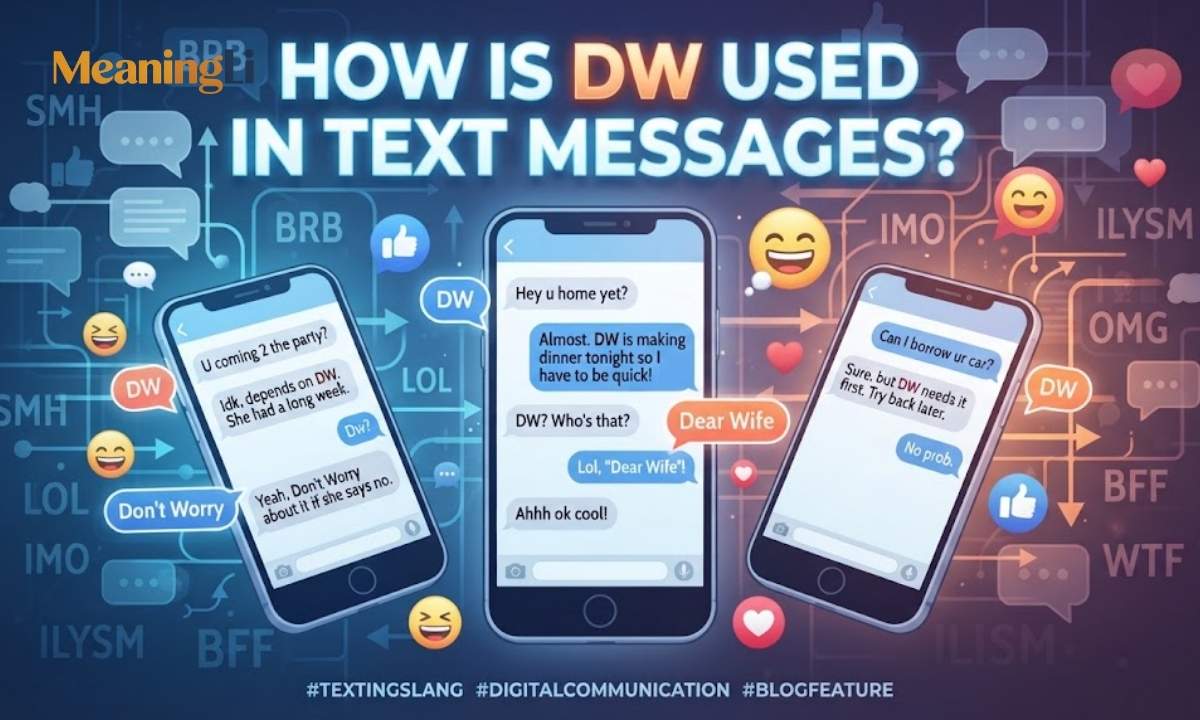
DW shows up in a few common situations, almost always with a reassuring tone.
DW When Reassuring Someone
If a friend is stressed or anxious about something, a simple “dw” is often used to calm them down and let them know things will be fine.
DW After an Apology
DW is frequently sent as a response to an apology, signaling that no explanation is needed and the issue is already forgotten.
DW When Something Is Not a Big Deal
People also use DW to downplay a small mistake or awkward moment, moving the conversation along without dwelling on it.
Where Is DW Used Online?
DW isn’t limited to one app it shows up across nearly every messaging platform.
DW Meaning on WhatsApp
On WhatsApp, DW is commonly used in personal chats to reassure a friend or family member quickly.
DW Meaning on Instagram
On Instagram, DW often appears in DMs or comment replies, usually to brush off a small concern or ease tension.
DW Meaning on Snapchat
On Snapchat, DW fits naturally into fast, casual back-and-forth chats where a quick reassurance is all that’s needed.
DW Meaning on TikTok
On TikTok, DW frequently shows up in comment sections, especially in response to someone expressing worry or uncertainty.
DW Meaning on Discord
In Discord servers, DW is used the same reassuring way, often to calm someone down mid-conversation.
DW in Gaming Chats
In gaming communities, DW usually keeps its standard meaning, though it can occasionally be used more critically to describe a teammate who isn’t contributing much, depending on tone.
What Does DW Mean From a Girl or Guy?
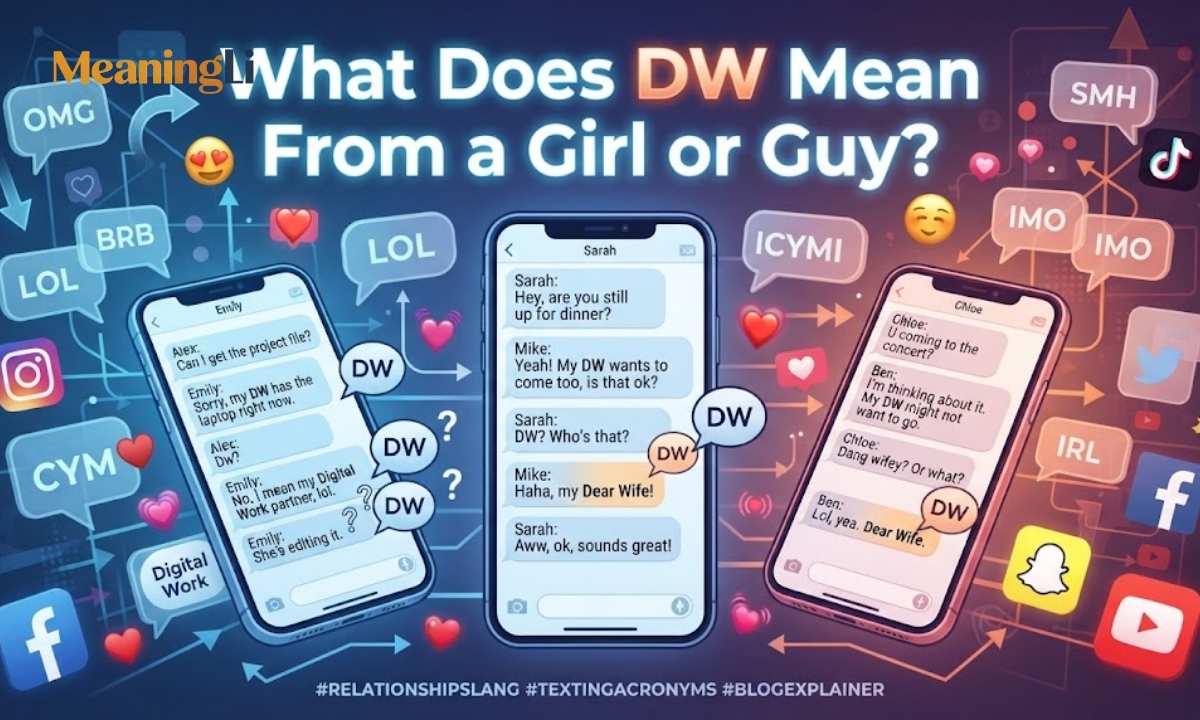
A common question people search is whether DW changes meaning depending on who sends it. For the most part, it doesn’t.
DW Meaning in a Text From a Girl
When a girl sends DW, it usually means she’s genuinely trying to comfort the other person or smooth over a small, awkward moment.
DW Meaning in a Text From a Guy
When a guy sends DW, it typically reflects a relaxed attitude either he’s truly not bothered, or he’d rather move past the topic quickly.
Does Gender Change the Meaning of DW?
Not really. The core meaning of “don’t worry” stays the same. What actually shifts the tone is the relationship between the two people and the context of the conversation, not the sender’s gender.
Real-Life Examples of DW in Text
Seeing DW in real conversations makes its meaning much easier to understand.
Example 1: Responding to an Apology
Alex: Sorry I forgot to text back yesterday!
Sam: dw, no worries at all.
Example 2: Reassuring a Friend
Mia: I’m really nervous about the interview tomorrow.
Jordan: dw, you’re going to do great.
Example 3: Responding to a Late Message
Priya: Just saw this, sorry for the late reply!
Liam: dw, I only sent it an hour ago.
Example 4: Casual Group Chat
Dana: Can’t make it tonight, something came up.
Ryan: dw, we’ll catch up another time.
Example 5: Social Media Conversation
Commenter: Hope this doesn’t come off rude, just curious!
Creator: dw, totally fine question 😊
What Does DW Mean in Different Contexts?
While “don’t worry” is the dominant meaning, DW shifts slightly depending on the setting.
DW in Casual Conversations
In everyday texting, DW is almost always used to comfort or reassure, keeping the tone light and easygoing.
DW in Gaming and Online Communities
In gaming spaces, DW can occasionally take on a more critical meaning, referring to a player who isn’t pulling their weight, though the reassuring meaning remains far more common.
DW in Professional Communication
DW isn’t suitable for professional or formal messages. In workplace communication, spelling out “don’t worry” or “no need to worry about that” keeps the tone clear and respectful.
DW in Medical or Specialized Contexts
In clinical or medical documentation, DW can stand for “Distilled Water,” which has nothing to do with its meaning in texting.
Other Meanings of DW
- Dear Wife an affectionate term sometimes used between couples
- Digital Watch used in tech-related conversations
- Down for Whatever signaling flexibility or openness to plans
DW vs. Similar Texting Terms
DW is often grouped with other short, reassuring texting abbreviations. Here’s how they compare.
| Abbreviation | Full Meaning | How It Differs From DW |
| DW | Don’t Worry | Reassures someone or downplays a small issue |
| NP | No Problem | Responds to thanks or a request, rather than reassurance |
| NVM | Never Mind | Signals dropping a topic entirely, not comforting someone |
| IDC | I Don’t Care | Expresses indifference, which can feel more dismissive than DW |
| “It’s Okay” | Full phrase version | More formal and complete than the casual shorthand of DW |
How Do You Know What DW Means?
Since DW can rarely carry a different meaning, checking the context helps confirm what’s intended.
Check the Words Around DW
Look at what comes right before or after DW. A message following an apology almost always points to “don’t worry.”
Consider the Conversation Topic
If the conversation involves stress, mistakes, or reassurance, DW is functioning in its standard, comforting sense.
Consider the Platform
Casual apps like Snapchat, Instagram, and TikTok almost always use the standard “don’t worry” meaning, while medical or technical documents may not.
Look at the Full Message
If DW is paired with extra words, like “dw about it” or “dw, it’s fine,” the meaning becomes even clearer.
How Should You Reply to DW?
Replying to DW is simple and doesn’t need overthinking.
Simple Replies to “DW”
- “Thanks, appreciate that.”
- “Okay, that helps.”
- “You’re the best, thank you!”
How to Reply When Someone Seems Distant?
- “You sure you’re okay with it?”
- “Okay, just let me know if that changes.”
- “Appreciate it, but happy to talk about it more if needed.”
Frequently Asked Questions
What does DW mean in a text message?
DW means “Don’t Worry.” It’s used to reassure someone or downplay a small issue.
What does DW stand for in texting and online chat?
It mainly stands for “Don’t Worry,” though rare contexts can give it other meanings like “Dear Wife.”
What does DW mean on Instagram, Snapchat, and TikTok?
Across all three platforms, DW typically keeps the same meaning: a casual way of saying don’t worry.
What does DW mean when someone says it in a conversation?
It usually means the person wants to comfort you or let you know something isn’t a big deal.
How do you use DW in a text message or sentence?
Use it to reassure someone, like “dw about the mistake, it happens” or simply “dw, it’s fine.”
How should you reply when someone says DW in a text?
A simple “thanks” or “okay, appreciate that” works well as a natural response.
Conclusion
DW is a simple, widely used abbreviation that means “Don’t Worry.” It’s most often used to comfort someone, respond to an apology, or brush off a small mistake in a friendly, low-pressure way.
Now that you understand its meaning, how it’s used across different platforms, and how to reply naturally, you’ll never have to pause and wonder what someone meant the next time DW shows up in your chats.