

Writers often pause over these two words. One looks right, the other looks almost right, and it is hard to tell which one belongs in your sentence.
Only one of them is standard English. This guide explains the meaning of “emasculate,” why “demasculate” keeps appearing, and which word to choose.
Emasculate vs. Demasculate: Which Word Is Correct?
Quick Answer: Emasculate or Demasculate?
“Emasculate” is the correct word. It is listed in standard dictionaries and used in formal writing.
“Demasculate” is nonstandard. It is not recognized by major dictionaries, so avoid it in essays, articles, and professional work.
- ✅ The new rules emasculated the committee.
- ❌ The new rules demasculated the committee.
Why These Two Words Are Confused
The mix-up has a few simple causes:
- The “de-” habit. English uses “de-” to mean “remove,” as in defrost, debug, and demystify. “Demasculate” looks like it follows that pattern.
- Similar neighbors. Words like demasculinize and defeminize are real, which makes “demasculate” feel familiar.
- Sound. Both words share “-masculate,” so they blur together in speech.
- Spell-check gaps. Some people never see a red line, so the error survives.
What Does Emasculate Mean?
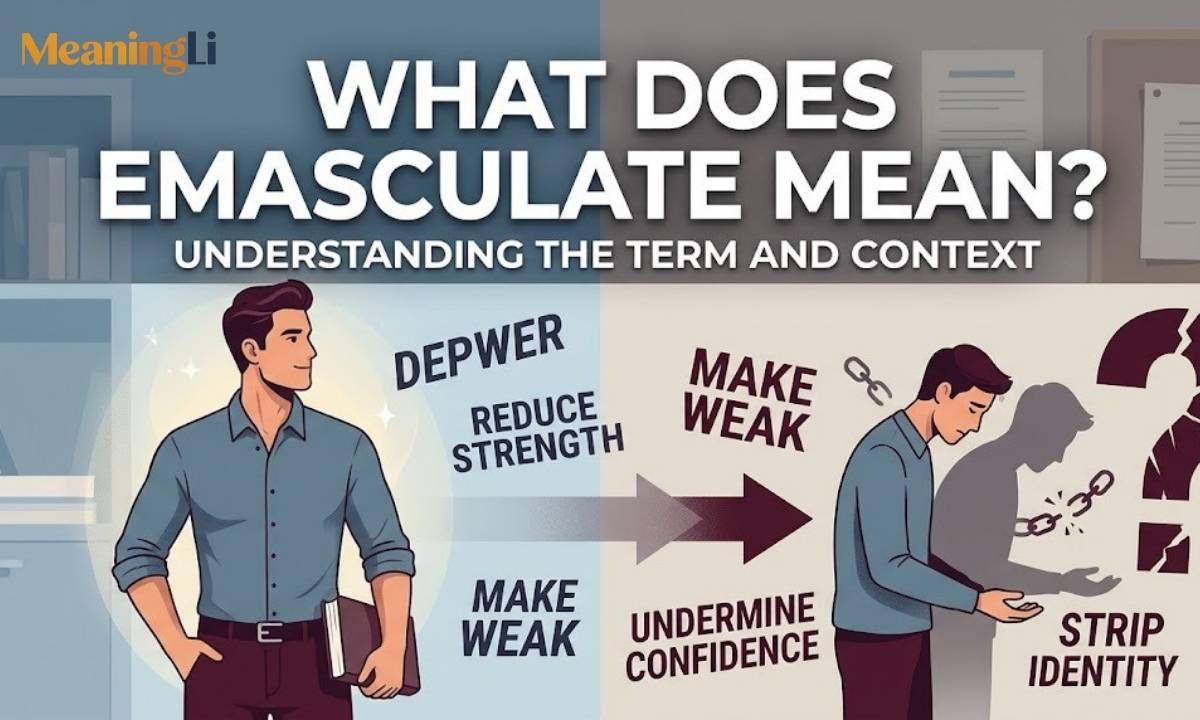
Emasculate Meaning in Simple English
To emasculate means to take away strength, power, or effectiveness. In everyday use, it usually means to make someone or something feel weak or powerless.
The word comes from the Latin emasculare, built from e- (“out”) and masculus (“male”).
The Figurative Meaning of Emasculate
Most people use the word in a figurative sense. It describes stripping away confidence, authority, or a sense of control.
- The constant criticism emasculated him in front of his team.
- She felt emasculated when her ideas were ignored.
This use leans on traditional ideas about masculinity. Some readers find it loaded, so context and tone matter. If you want a neutral word, “undermine” or “disempower” often does the job.
The Literal and Scientific Meaning of Emasculate
The original sense is literal: to castrate a male animal or person. You will still see it in veterinary, historical, and medical texts.
In biology, the word also has a technical use. It is covered in the botany section below.
Emasculate Beyond Personal Identity
The word is not limited to people. Writers also apply it to things that lose their force:
- A law or bill that is watered down until it has no bite
- A policy stripped of its enforcement power
- A story or speech edited until it feels toothless
Example: “Lawmakers emasculated the bill with so many amendments that it changed almost nothing.”
Emasculate Word Forms and Related Words
Emasculate, Emasculated, and Emasculating
| Form | Part of Speech | Example |
| emasculate | Verb (base form) | Budget cuts can emasculate a good program. |
| emasculates | Verb (third-person singular) | Constant micromanagement emasculates the staff. |
| emasculated | Past tense / past participle / adjective | The report was emasculated before release. |
| emasculating | Present participle / adjective | It was an emasculating experience. |
| emasculate | Adjective (less common, formal) | An emasculate version of the original plan. |
What Does Emasculation Mean?
“Emasculation” is the noun. It means the act of weakening or removing strength, or the state of being weakened.
- The emasculation of the agency left it unable to act.
- He described the layoff as a kind of professional emasculation.
Synonyms of Emasculate
Pick the synonym that fits your meaning:
- For weakening something: weaken, undermine, cripple, defang, enfeeble, sap, water down
- For taking away power: disempower, neutralize, subdue, incapacitate
- For the literal sense: castrate, geld, neuter
- For stripping force from writing or law: dilute, blunt, soften
Examples of Emasculate in Different Contexts
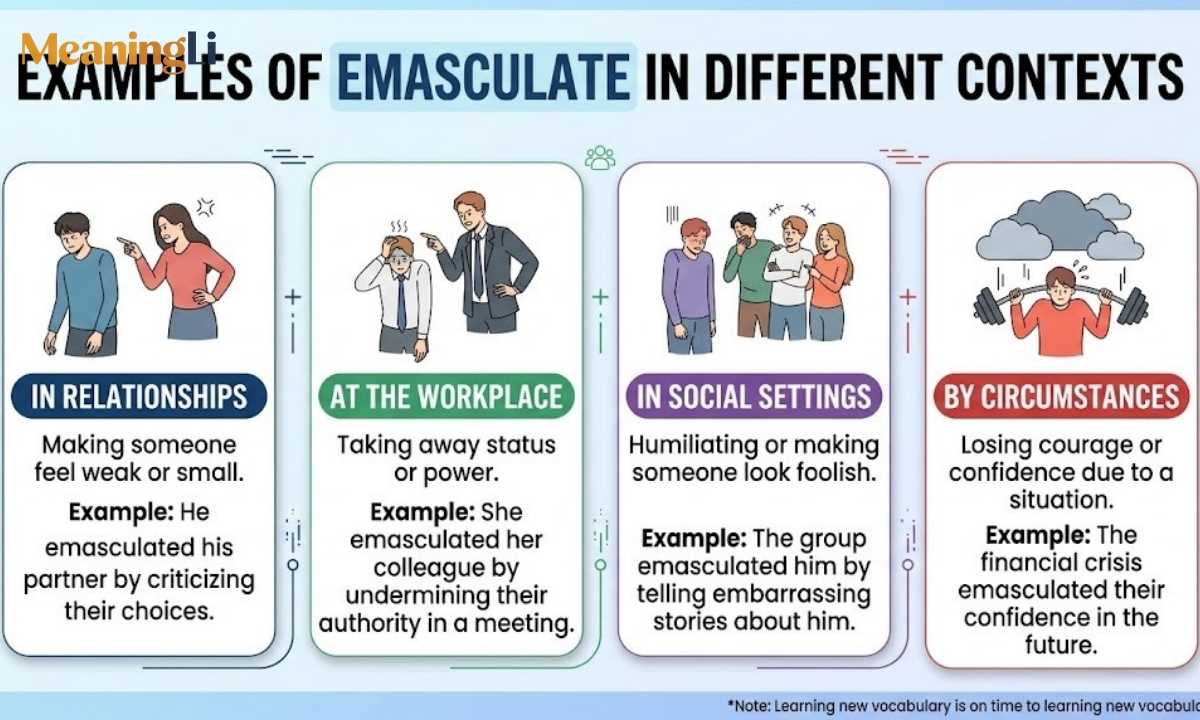
Emasculate in Everyday English
- Being laughed at in public emasculated him.
- She said the nickname was meant to emasculate her brother.
- Don’t let one bad review emasculate your confidence.
Emasculate in Business, Politics, and Leadership
- The merger emasculated the regional office, which lost most of its decision-making power.
- Critics said the amendment would emasculate the new privacy law.
- A manager who overrules every decision can emasculate even a strong team lead.
- The senator argued that the compromise emasculated the original proposal.
Emasculate in Scientific and Botanical Contexts
In plant breeding, to emasculate a flower means to remove its male parts (the stamens or anthers). This stops self-pollination, so breeders can cross-pollinate on purpose.
- The researcher emasculated each wheat flower before applying pollen from a chosen parent.
- Emasculation is a standard step in controlled hybridization.
In animal science, the word may refer to castration, as in older farming texts.
What Does Demasculate Mean?
Is Demasculate a Word?
Not in standard English. You will not find it in major dictionaries. When people write it, they almost always mean “emasculate.”
Why Do People Use the Word Demasculate?
People use it because it feels logical. If “de-” means “remove,” then “demasculate” seems to mean “remove masculinity.” It also appears in casual posts, comments, and speech, where nobody checks the spelling.
Is Demasculate Accepted in Standard English?
No. Editors and teachers will treat it as an error. If you want a similar real word, use one of these:
- Emasculate: the standard choice for weakening or unmanning
- Demasculinize: a real term, mostly used in biology, for removing male traits
- Unman: a more literary word for stripping courage or strength
Emasculate vs. Demasculate: Key Differences
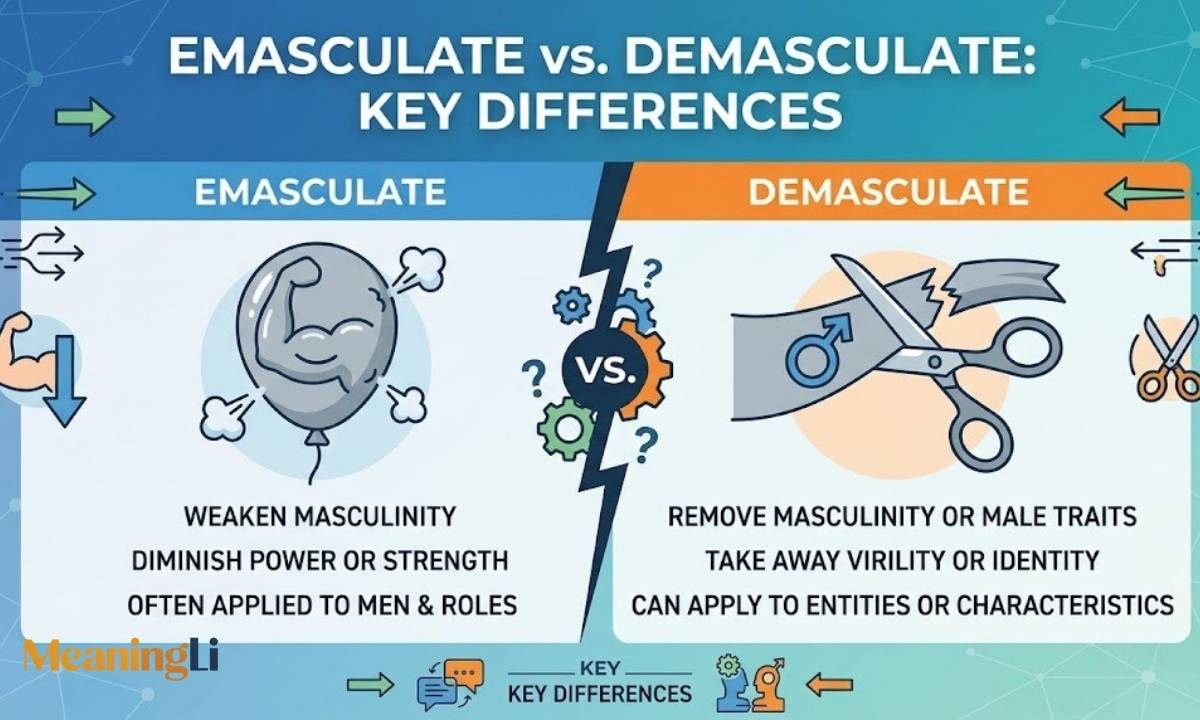
Standard vs. Nonstandard Usage
“Emasculate” is standard. “Demasculate” is nonstandard and best avoided. That is the main difference, and it is the one that matters for your writing.
Meaning and Dictionary Recognition
- Emasculate: Has clear, documented meanings (literal, figurative, and botanical).
- Demasculate: Has no official definition. Readers must guess what you meant.
Which Word Should You Use in Formal Writing?
Use emasculate. It is safe in academic papers, journalism, business writing, and fiction. If the tone feels too strong, choose a milder word such as undermine or weaken.
Emasculate vs. Demasculate Comparison Table
| Feature | Emasculate | Demasculate |
| Standard English | Yes | No |
| Found in major dictionaries | Yes | No |
| Origin | Latin emasculare | Informal blend, likely by analogy with “de-” words |
| Main meanings | To weaken, to castrate, to remove stamens | Unclear, usually a mistake for “emasculate” |
| Suitable for formal writing | Yes | No |
| Related noun | Emasculation | None recognized |
| Better alternative | Not needed | Use “emasculate” or “demasculinize” |
Emasculate vs. Demasculate in a Sentence
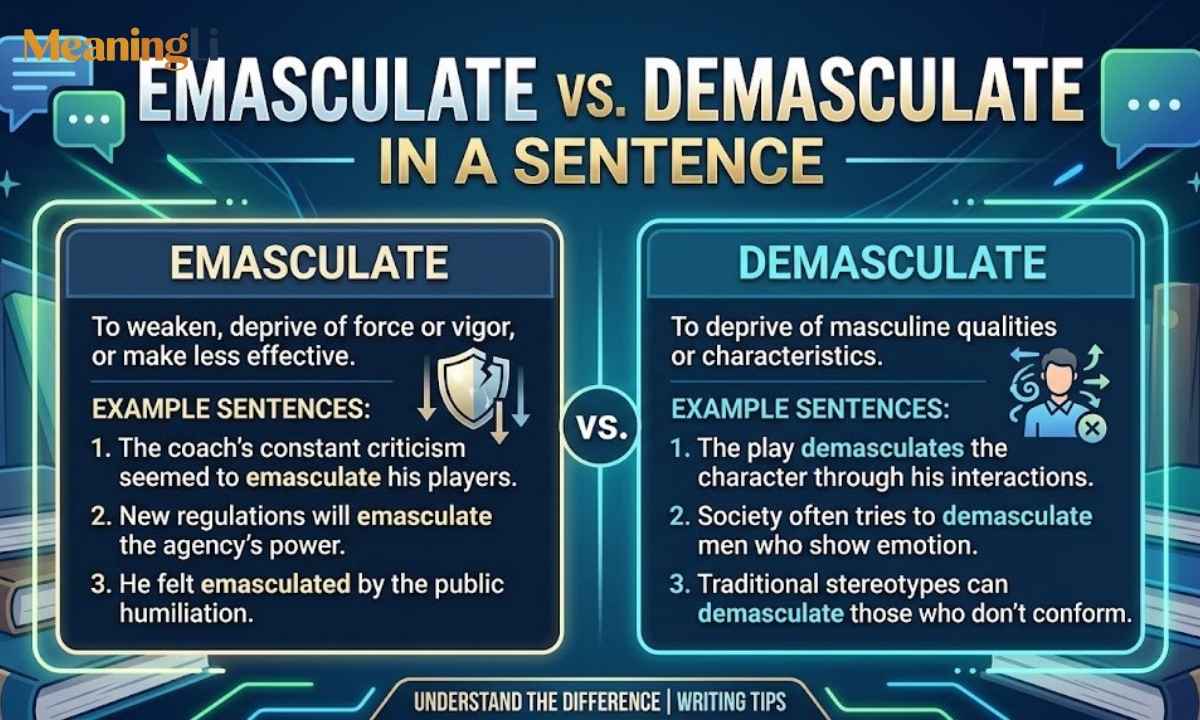
Examples Using Emasculate
- The coach’s sarcasm emasculated the young player.
- Heavy editing emasculated the author’s final chapter.
- Rising costs emasculated the charity’s ability to help.
- The botanist emasculated the blossoms before sunrise.
- They feared the court ruling would emasculate the union.
Examples Showing the Nonstandard Use of Demasculate
| Nonstandard | Corrected |
| The memo demasculated the team. | The memo emasculated the team. |
| He felt demasculated after the argument. | He felt emasculated after the argument. |
| Amendments demasculated the bill. | Amendments emasculated the bill. |
How Do You Pronounce Emasculate?
Emasculate Pronunciation in British and American English
Both accents are close. The stress falls on the second syllable.
- American English: ih-MAS-kyuh-layt
- British English: ih-MAS-kyuu-layt
As an adjective, the ending is often softer: ih-MAS-kyuh-lit.
Is There a Standard Pronunciation of Demasculate?
No. Because the word is nonstandard, there is no official pronunciation. People tend to say it like “emasculate” with a “dee-” or “dih-” in front, which is another sign the two words are being mixed up.
What Is the Opposite of Emasculate?
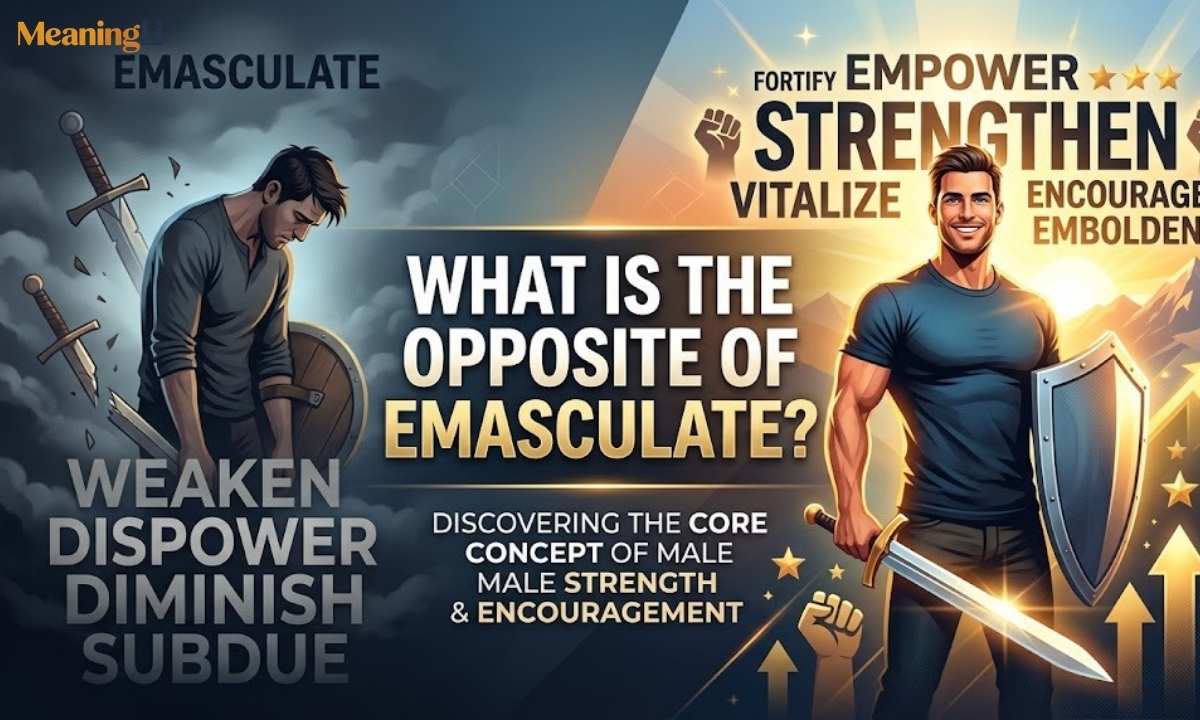
Antonyms of Emasculate
- empower
- strengthen
- invigorate
- fortify
- reinforce
- bolster
- energize
- virilize (formal, literal sense)
Choosing the Right Opposite Based on Context
The best antonym depends on what is being weakened.
| Context | Emasculate Means | Good Opposite |
| A person’s confidence | To undermine | Empower, embolden |
| A law or policy | To water down | Strengthen, toughen |
| A team or group | To strip of authority | Fortify, bolster |
| Writing or speech | To dull its impact | Sharpen, energize |
| Biology | To remove male traits | Masculinize, virilize |
When Should You Use Emasculate Instead of Demasculate?
When to Use Emasculate
Use “emasculate” whenever you mean to:
- Weaken or strip power from a person, group, or rule
- Make something feel toothless or ineffective
- Describe castration in a literal or historical sense
- Describe removing the male parts of a flower in botany
Why You Should Generally Avoid Demasculate in Formal Writing
- It is not an accepted word.
- It can make your writing look careless.
- It forces the reader to guess your meaning.
- A real alternative is always available.
Common Mistakes to Avoid
Confusing Emasculate With Demasculate
Remember one rule: if you mean weaken, write emasculate. If you need a “de-” word for biology, use demasculinize.
Using Emasculate When You Mean Simply “Weaken”
Not every loss of strength is emasculation. A weak argument is just weak. Save the word for cases where power, authority, or force is being taken away on purpose.
- ❌ The rain emasculated our picnic.
- ✅ The rain ruined our picnic.
Understanding the Context and Connotations of Emasculate
The word carries gendered meaning. It can imply that strength is tied to masculinity, and some readers will notice that. Before you use it, ask yourself:
- Does my audience expect this kind of language?
- Would “undermine,” “disempower,” or “defang” be clearer?
- Am I describing a person, or a thing like a law?
In sensitive writing, a neutral word is often the better choice.
Frequently Asked Questions
What is the difference between emasculate and demasculate?
“Emasculate” is a standard word meaning to weaken or strip of power. “Demasculate” is nonstandard and usually a mistaken version of it.
Is demasculate a real word, or should I use emasculate?
Demasculate is not recognized in standard dictionaries, so use “emasculate.” For a biological sense, “demasculinize” is the real term.
What does emasculate mean in simple English?
It means to take away someone’s strength, power, or confidence. It can also mean to remove the male parts of a plant or animal.
How do you use emasculate in a sentence?
Use it as a verb: “The constant interruptions emasculated her speech.” It also works with laws: “The amendment emasculated the bill.”
What is the opposite of emasculate?
Common opposites are empower, strengthen, and invigorate. The best choice depends on whether you are talking about a person, a law, or a plant.
Can emasculate be used to describe someone who feels less confident or powerful?
Yes. It often describes a loss of confidence or authority, but it is a strong, gendered word, so “undermined” or “disempowered” may suit a neutral tone better.
Final Thoughts
“Emasculate” is the correct word, and “demasculate” is a common slip. If you mean to weaken, strip of power, or (in botany) remove stamens, write emasculate.
Keep the context in mind, since the word carries a strong tone. When in doubt, pick a clearer, more neutral alternative like undermine, weaken, or disempower, and your writing will stay precise and professional.